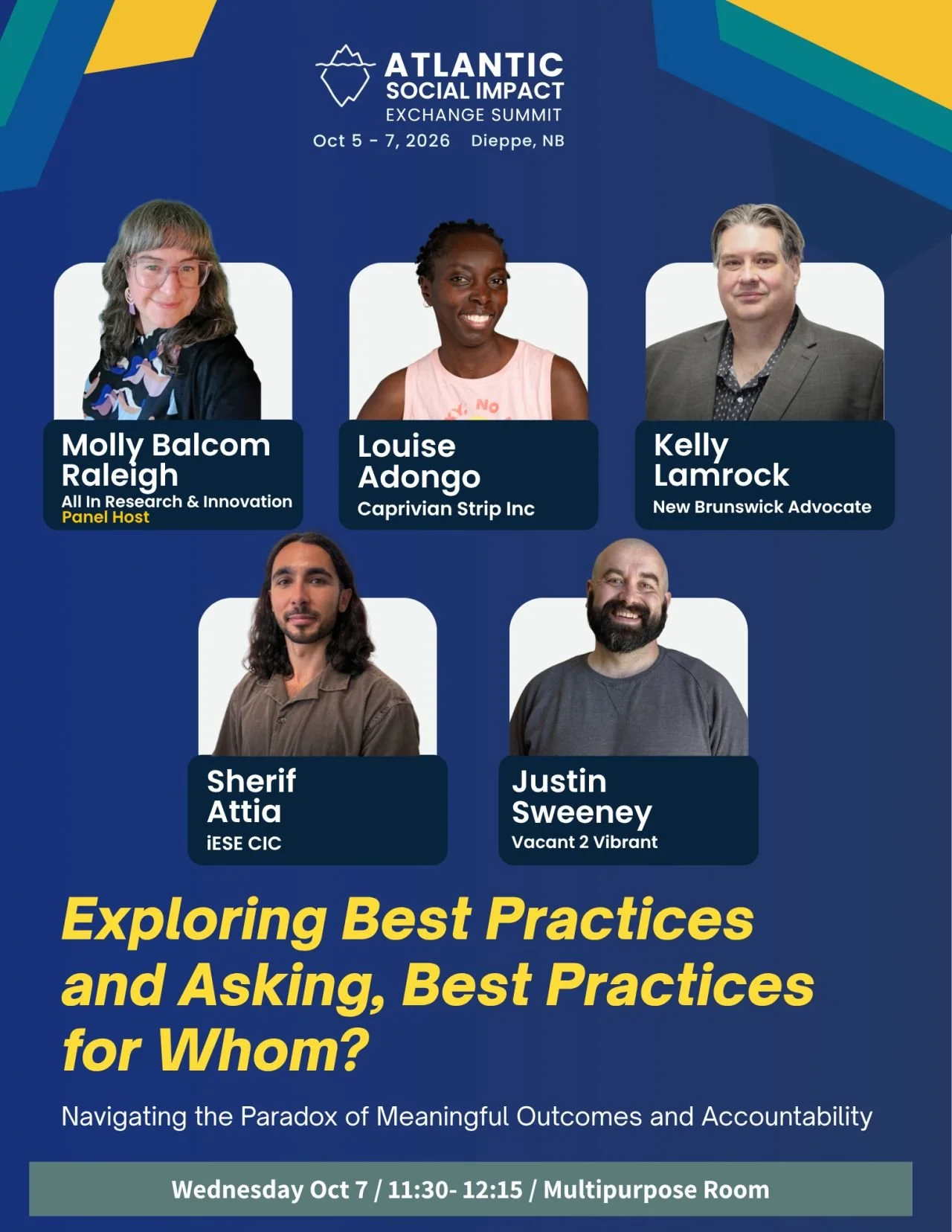
Panel reflection: Navigating the Paradox – data outcomes and accountability

In a recently LinkedIn post, Dr. Randolph Potts reminds us that Paolo Freire’s work must be understood in relation to African liberatory thought, including Franz Fanon and Amilcar Cabral. The lineage matters, asking us for an unflinching self-audit about our work: does our work reproduce oppression, or help communities gain greater agency over the conditions shaping their lives?
From my perspective as a practitioner when we consider outcomes, impact and accountability “best practices”:
· Measurement is not neutral. Who defines success determines what becomes visible, valued, and funded.
· Communities are not data sources. They sense change early, hold lived knowledge and bear the consequences when institutional choices miss the mark.
· Bridging is valuable but needs to be valued and compensated
· Bridging must move power, not only information. If community insight does not influence decisions, resources, and the definition of outcomes, engagement becomes extraction.
For those of us who bridge institutions and communities, in the work we do ; it asks more of accountability than better indicators. It requires us to consider and assess whether power, resources, and responsiveness move back toward the people (clients, beneficiaries, community members most impacted) who hold the consequences of our maladapted systems.
The liberatory lineage connecting Freire, Fanon, and Cabral establishes how a so-called best practice reproduces existing power, or whether or not it helps communities gain greater agency over the conditions shaping their lives. In which case, Accountability becomes more than fidelity to a (logic) model or theory of transformation. It becomes more about an ongoing responsibility to the people a program or service practice is meant to serve.
Caprivian Strip - Work with us!
Are you looking to evolve your meaningful results metrics and impact strategy?
Get in Touch!
Caprivian Strip Inc helps people in organizations see the systems they are already living within, and supports them to shape their work in those systems in ways that feel authentic, human, and connected through the conversations that move us forward together.